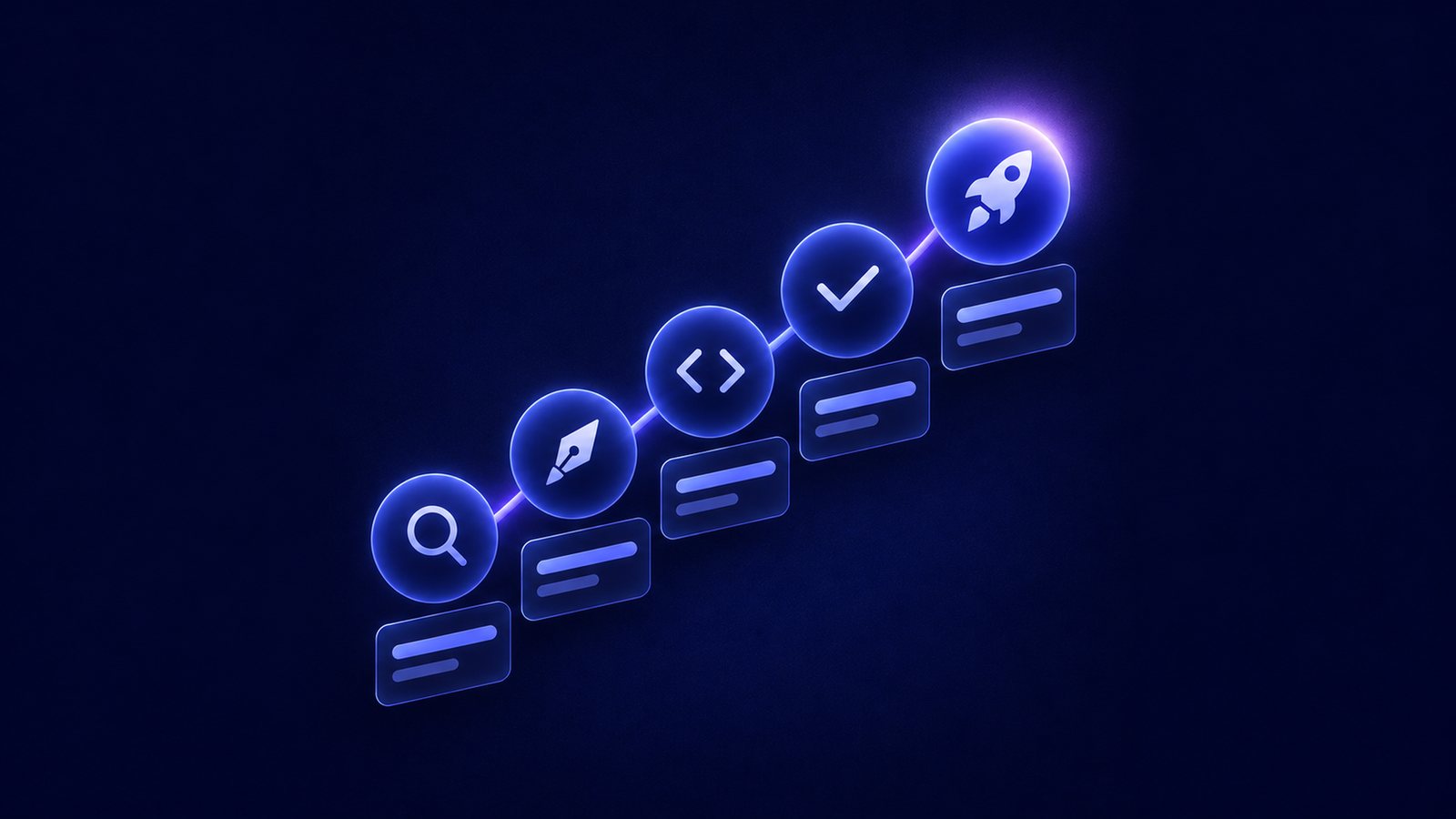
No black boxes. This is the exact process our team follows on every project, from the first call to launch day and beyond.
Clients often tell us the best part of working with Grabodo is that they always know what is happening. That is not an accident. Every project, whether it is a marketing website, a web app, a mobile app or an API, follows the same clear process, run by the same in-house team in Navi Mumbai.
In this article I want to open up that process step by step: what happens at each stage, what we need from you, what you can expect from us and how you can see progress at any moment. If you are comparing agencies, it should also give you a useful list of questions to ask anyone you are considering.
Who you will work with
Before the process itself, the people. Every project has a dedicated project manager who is your main point of contact from kickoff to launch and beyond. Behind them are designers, developers and testers who all work in-house. We do not pass your project to freelancers or outsource parts of it to other companies, so the team you meet on the first call is the team that builds your product.
- Your project manager keeps the plan, runs reviews and answers your questions.
- Designers turn requirements into wireframes and visual designs.
- Developers build the front end, backend and integrations.
- Testers check the work on real devices and browsers before you see it as “done”.
Before kickoff: the first call
Most projects begin with a free call. We listen more than we talk: what you are trying to achieve, who your customers are, what has or has not worked before and what constraints you are working within. If we think a smaller first step, a different platform or an off-the-shelf tool would serve you better, we will say so. If it looks like a good fit, we follow up with a proposal that sets out our understanding of the project, the approach we recommend and how we would phase the work.
1. Discovery
We start by understanding your business, your users and your goals. That means conversations with you and your team, a review of anything that exists today, such as a current website, an app, spreadsheets or internal tools, and a look at how your customers actually behave.

From there we agree on scope and turn it into a written plan with milestones, so everyone knows what “done” means. The plan covers the pages or screens, the features, the integrations, the content responsibilities and the order in which things will be built.
What we need from you at this stage
- Time with the people who understand the business and its customers.
- Access to existing systems, analytics and brand assets.
- Clarity on who gives feedback and who signs off.
- Honest priorities: what must be in the first release and what can wait.
2. Design
Wireframes come first. These are simple layouts that show structure, content and flow without colours or images getting in the way. They let us agree on what each screen does before anyone debates fonts.
Then comes visual design. You review real screens, not abstract documents, and we iterate until the flows feel right on desktop and mobile. We design key screens for both from the start rather than squeezing a desktop layout onto a phone at the end.
How we handle feedback
Feedback works best when it is consolidated and specific. We ask clients to gather comments from their team into one round per review, and we explain the reasoning behind our design choices so you can push back where something does not fit your business. Every agreed change is recorded, so nothing gets lost between rounds.
3. Development
Our developers build in short cycles. Each cycle has a clear set of tasks, and at the end of it there is something working you can look at. Progress is shared on a staging link, a private copy of the site or app that you can open any time, on any device.
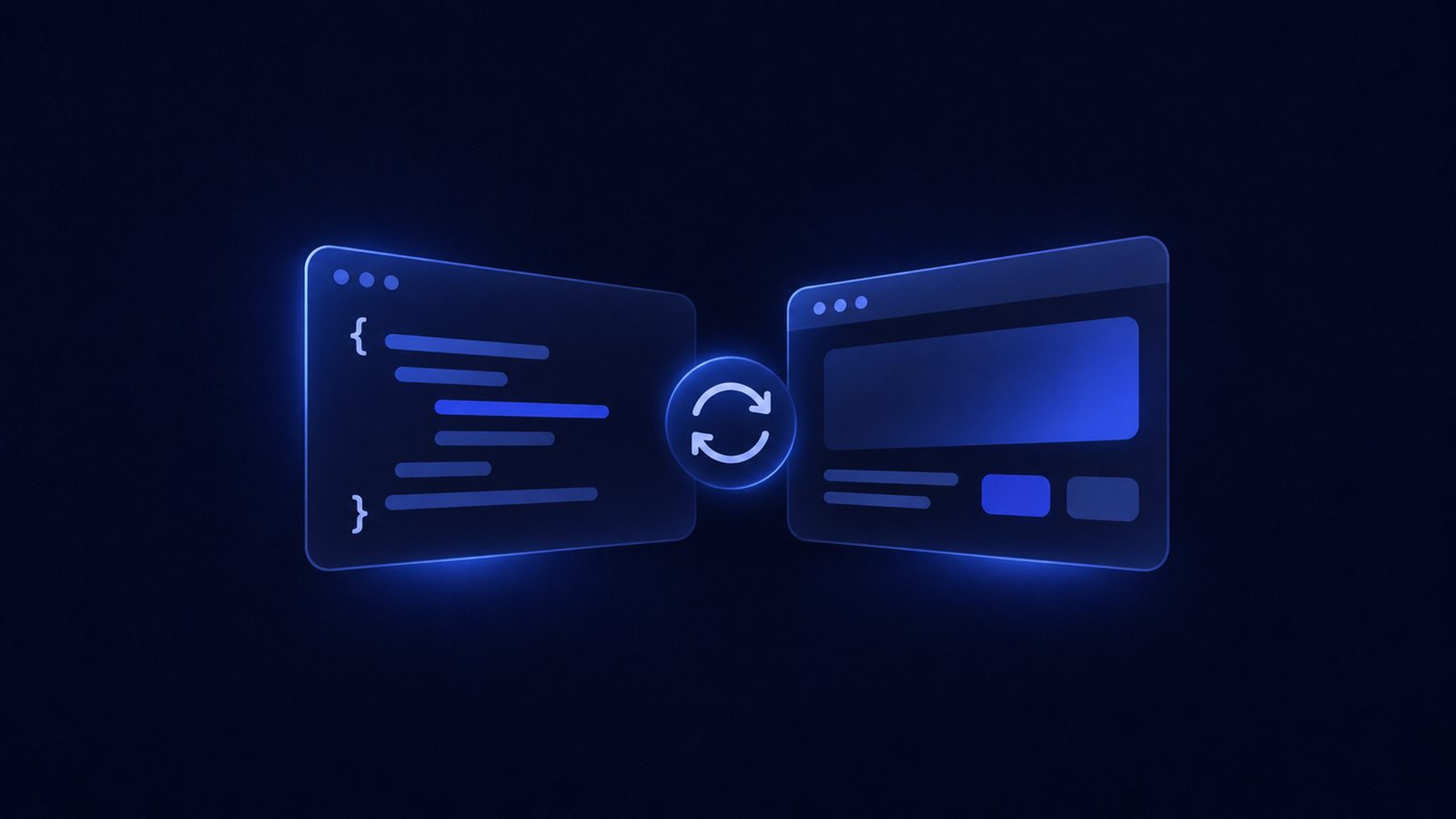
You do not have to wait for a status email to know where things stand. In a shared project tracker, you can follow active tasks, remaining hours and progress whenever you like. Your project manager also walks you through what has been completed and what is coming next at regular check-ins.
Handling changes mid-project
New ideas will come up once you see the product taking shape. That is healthy. When they do, your project manager will explain the impact on scope, effort and the plan, and you decide whether to add it now, swap it for something else or keep it for a later phase. No surprises on the invoice, and no quiet scope creep.
The team you meet on the first call is the team that builds your product. That is what being 100% in-house means to us.
4. QA and launch
Testing happens throughout development, but before launch we run a dedicated round of checks across the whole product. Our pre-launch checklist includes:
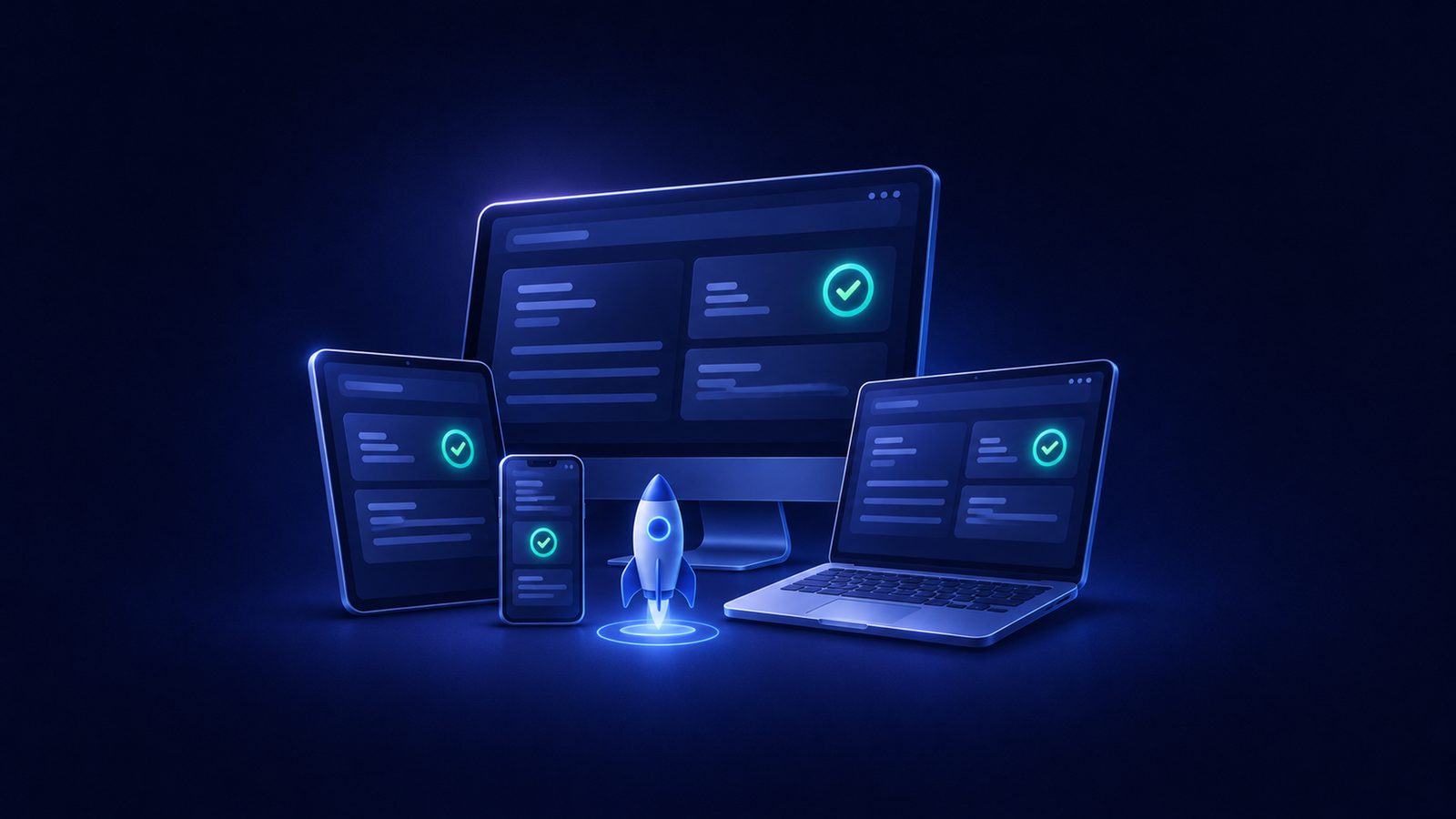
- Testing on real devices and browsers, not just a developer’s laptop.
- Speed, accessibility and technical SEO checks.
- Forms, payments, emails and integrations tested end to end.
- Redirects from old URLs mapped and verified, so existing search rankings and links are protected.
- Analytics and conversion tracking confirmed.
- Content reviewed for placeholders, broken links and missing images.
- A launch plan with a rollback option, just in case.
For mobile apps, launch also includes preparing store listings and handling the submission process for the App Store and Google Play. We agree a launch window with you that avoids your busiest trading periods, and the team is on hand while the switch happens.
5. After launch
We do not disappear after launch. We monitor the product closely in the period after go-live, fix anything that comes up and make sure real-world usage matches what we tested.
We also train your team to manage content confidently, whether that is updating pages, adding blog posts, changing prices or managing users. The aim is that everyday changes do not need a developer. For bigger changes, we stay on for support, and many clients continue with us for ongoing improvements as their business grows.
What ongoing work can look like
- Fixes and small improvements based on how real users behave.
- New features, pages or integrations as the business evolves.
- Security updates and dependency maintenance.
- A second platform, such as a mobile app built on the same backend.
How we keep communication clear
A good process is only useful if everyone can see it working. These are the habits we rely on throughout a project:
- One point of contact: your project manager, who knows the whole project.
- Written decisions, so agreements do not depend on anyone’s memory.
- A staging link that always shows the latest work.
- A shared project tracker for live visibility of tasks, hours and progress.
- Regular check-ins with a clear agenda and a short summary afterwards.
Frequently asked questions
How long does a typical project take?
It typically depends on scope: the number of pages or screens, the features, the integrations and how quickly feedback and content arrive. We agree milestones during discovery so you know the plan before development starts.
Will I be able to see the work before launch?
Yes. You review designs as they are produced and can open the staging link at any time during development. Nothing goes live without your sign-off.
What if I am not technical?
That is completely fine, and common. Your project manager explains decisions in plain language, and we focus your input on what you know best: your business and your customers.
Who owns the code and content?
Ownership terms are set out clearly in the agreement before work begins, so you know exactly what you receive at handover. If you have specific requirements, raise them on the first call and we will discuss them openly.
If you are planning a website, web app or mobile app and want to see how this process would work for your project, book a free call with us. You will speak to the people who would actually be involved, and we will give you an honest view of how we would approach it.